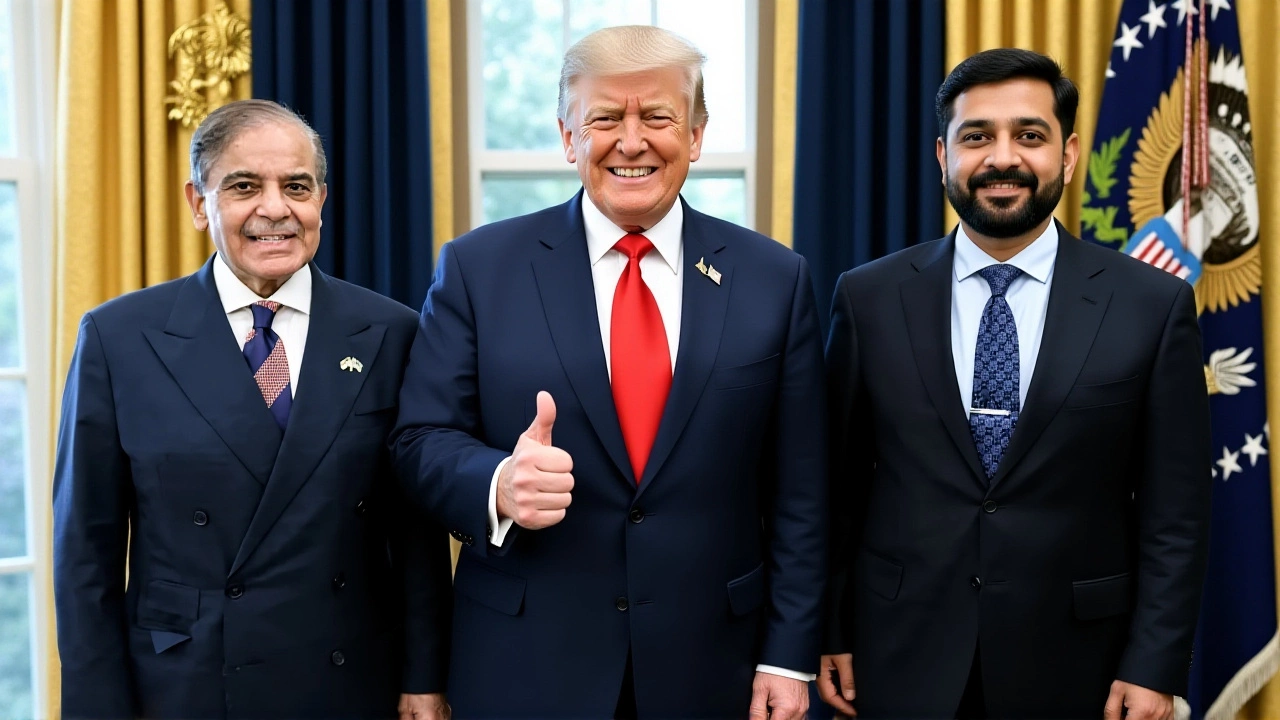
When Donald Trump, former U.S. President, posted a lengthy message on his social media platform Truth Social on May 25, 2026, he didn't mince words. He issued what he called a "mandatory request" for several Muslim-majority nations—including Pakistan, Saudi Arabia, and Turkey—to sign the Abraham Accords. The move has sent shockwaves through diplomatic circles, forcing Islamabad to confront a stark choice: uphold its decades-long stance on Palestinian rights or pivot toward American economic demands.
The post explicitly named Saudi Arabia, Qatar, Egypt, Jordan, Bahrain, Pakistan, and Turkey as targets for this renewed push. Trump argued that countries which have already signed the accords—the UAE, Bahrain, Morocco, Sudan, and Kazakhstan—are thriving economically even amid regional conflict. "Look at the UAE, look at Bahrain... they are flourishing," he wrote, framing normalization with Israel not just as a political gesture, but as an economic imperative.
The "Mandatory Request" Explained
Here’s the thing: calling a diplomatic appeal a "mandatory request" is a contradiction in terms that signals intense pressure rather than polite persuasion. In his Truth Social post, Trump urged these nations to strengthen ties with Israel immediately. He pointed to the financial and social benefits enjoyed by early adopters of the 2020 agreement, suggesting that those holding out are missing out on significant prosperity.
But wait, there’s a twist. This isn’t just about trade deals. Analysts from ABP Live suggest this move is tightly linked to broader negotiations involving Iran. Trump hinted that he could bring Iran into the fold if other key players like Saudi Arabia and Pakistan commit first. It’s a classic high-stakes negotiation tactic: create a bloc of normalized relations to isolate Tehran, then offer them a seat at the table under strict conditions.
Pakistan’s Diplomatic Dilemma
For Pakistan, the stakes couldn’t be higher. For decades, Islamabad has positioned itself as a vocal supporter of Palestinian statehood, often withholding full diplomatic recognition of Israel until a two-state solution is established. The country’s passport even highlights its support for Palestine—a symbolic stance that resonates deeply with its public opinion.
Turns out, this traditional position clashes directly with Trump’s demand. If Pakistan signs the Abraham Accords, it risks alienating its own population and undermining its moral authority in the Muslim world. Yet, refusing puts strain on its crucial economic and security relationships with the United States and Gulf states like Saudi Arabia and Qatar. As one analyst noted, Pakistan is now "in a bind," caught between ideological consistency and pragmatic survival.

Historical Context: What Are the Abraham Accords?
To understand why this matters, we need to look back to 2020. The Abraham Accords were a series of bilateral agreements brokered by the U.S. government that normalized relations between Israel and several Arab nations. Initially, the UAE and Bahrain joined, followed later by Morocco and Sudan. The stated goals were clear: reduce Arab-Israeli hostility, boost trade and defense cooperation, and counter Iranian influence in the region.
Proponents argue these accords have delivered tangible benefits. Trade volumes between Israel and the UAE have surged, and joint tech ventures have flourished. Critics, however, contend that the agreements bypass the core issue of Palestinian displacement and statelessness, effectively rewarding Israel without securing justice for Palestinians.

Regional Reactions and Future Implications
The ripple effects of Trump’s post are already visible. Media outlets like Aaj Tak and Agnibaan report that the announcement has added uncertainty to potential peace talks with Iran. Meanwhile, Turkish officials have remained silent, likely weighing their own strategic interests against domestic political pressures.
Experts warn that if major Muslim nations like Pakistan and Saudi Arabia join the accord, it could fundamentally alter the balance of power in West Asia. Iran’s proxy networks might weaken, but anti-American sentiment could surge. The details of any new treaty remain unclear, but the direction of travel is unmistakable: Washington is pushing for a unified front against Tehran, using economic incentives as its primary lever.
Frequently Asked Questions
What exactly are the Abraham Accords?
The Abraham Accords are a series of normalization agreements signed in 2020 between Israel and several Arab nations, including the UAE, Bahrain, Morocco, and Sudan. Brokered by the U.S., the deal aims to foster peace, trade, and security cooperation while reducing regional tensions, particularly regarding Iranian influence.
Why is Trump pressuring Pakistan to join?
Trump views Pakistan’s inclusion as critical to isolating Iran and creating a broader coalition of Muslim-majority nations aligned with U.S. and Israeli interests. He argues that economic benefits seen by earlier signatories would also accrue to Pakistan, despite its historical opposition to recognizing Israel without a Palestinian state.
How does this affect the Palestinian cause?
Critics argue that expanding the Abraham Accords sidelines the Palestinian issue, as normalization proceeds without resolving the conflict over Gaza and the West Bank. Many Muslim nations have conditioned their recognition of Israel on the establishment of a viable Palestinian state, a condition Trump appears willing to bypass.
Has Pakistan officially responded to Trump’s request?
As of late May 2026, no official statement from the Pakistani government has confirmed acceptance or rejection. However, analysts note that internal debates are intensifying, with foreign policy experts warning that joining the accords could trigger significant domestic backlash and damage Pakistan’s standing in the OIC (Organization of Islamic Cooperation).